 Vision.
Our vision is one sentence: one sales adviser, on every screen, at every shelf, the same conversation.
The customer starts shopping on the site, carries on in the app and finishes in the shop. The same adviser is there every time.
One sales adviser. On every screen, at every shelf, the same conversation.
Sam starts shopping on the website on Tuesday evening, carries on in the app on Thursday and finishes in the shop on Friday. The same adviser is there every time.
Everything on this page is a goal. The surface that works today is the website.
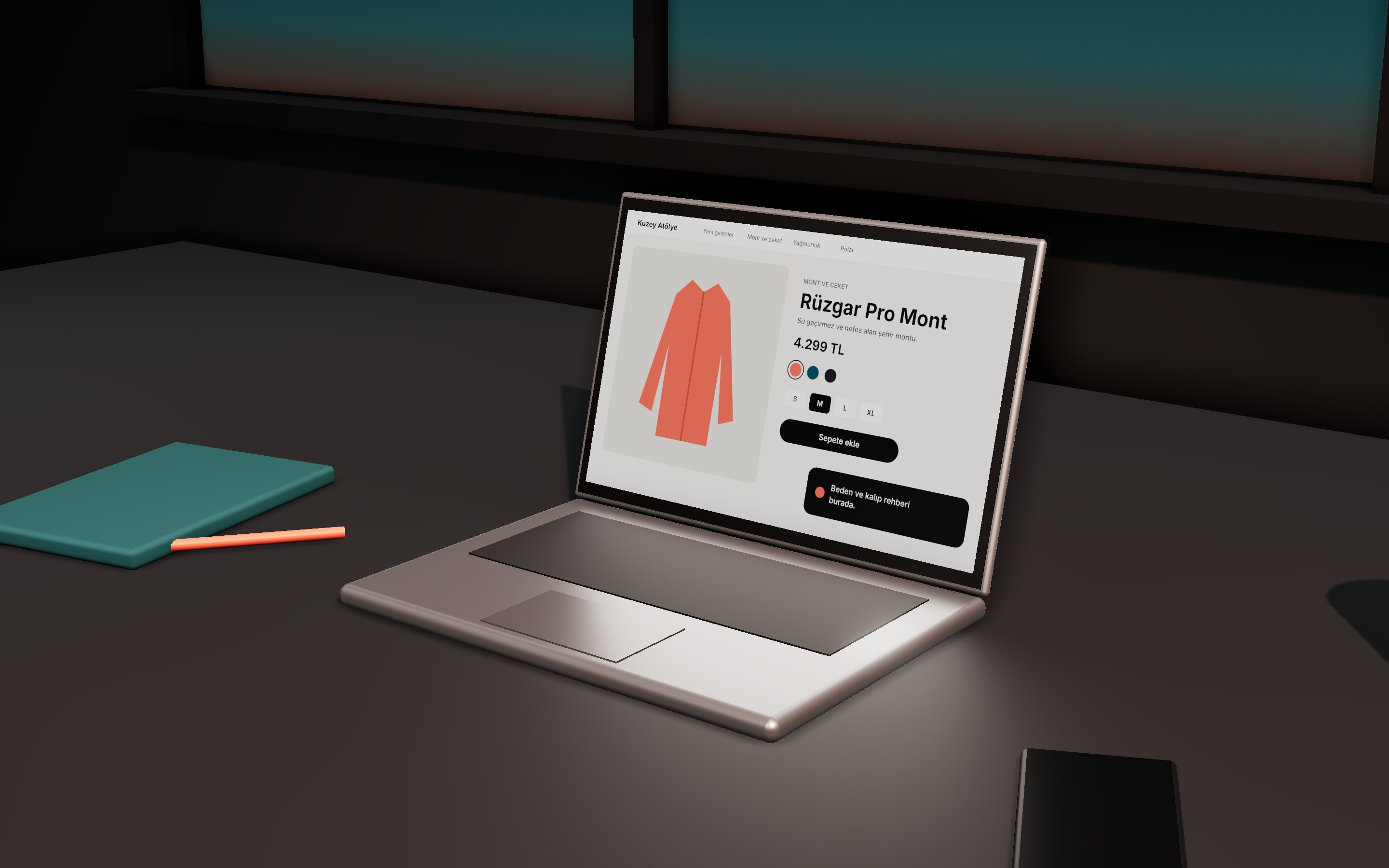
Let us take an example. Today Sam asks about a coat on the site; this part works today.
Our goal is for the same adviser to stay with Sam in the app, at the kiosk, on the glasses and in the shop, picking up where they left off.
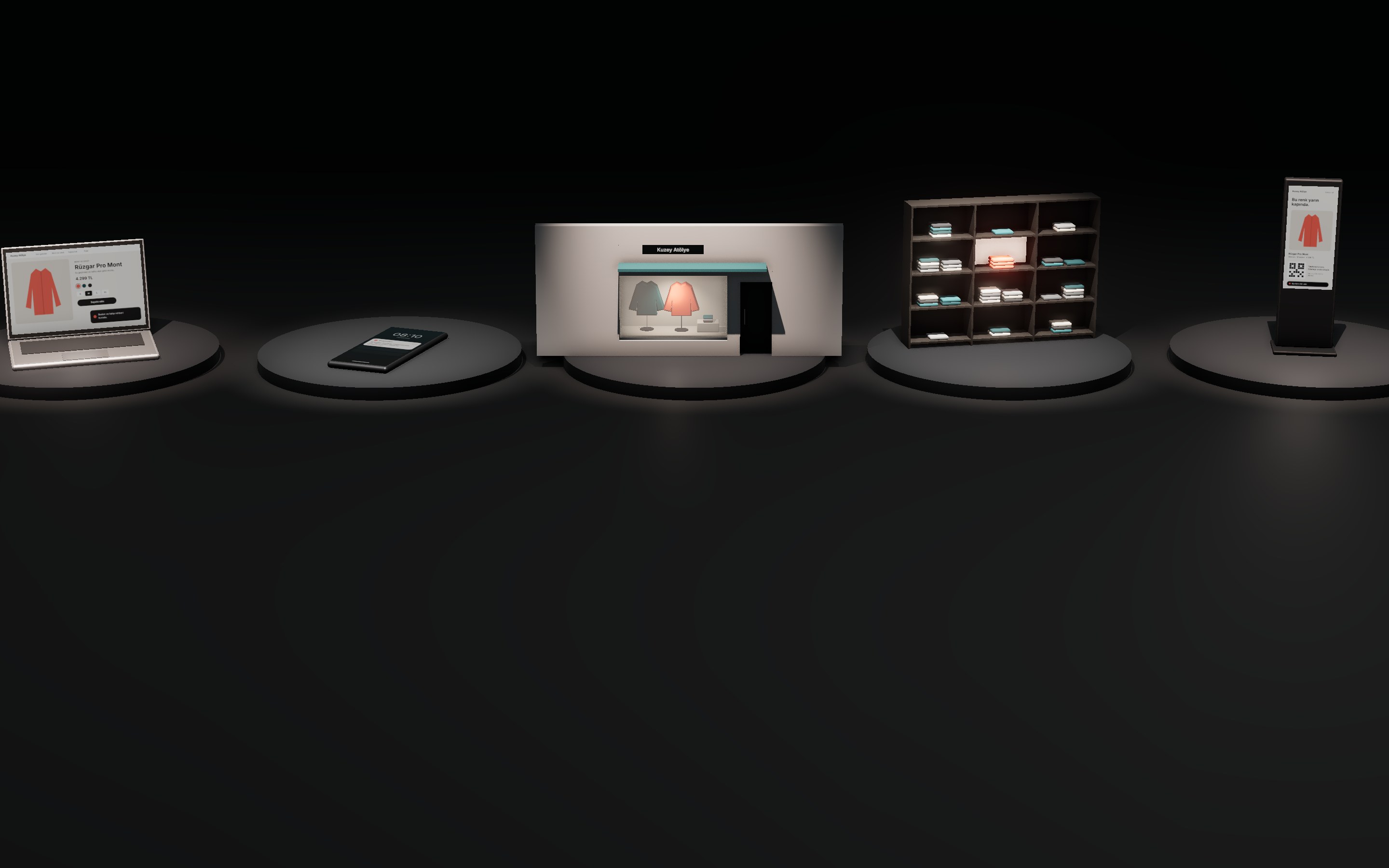
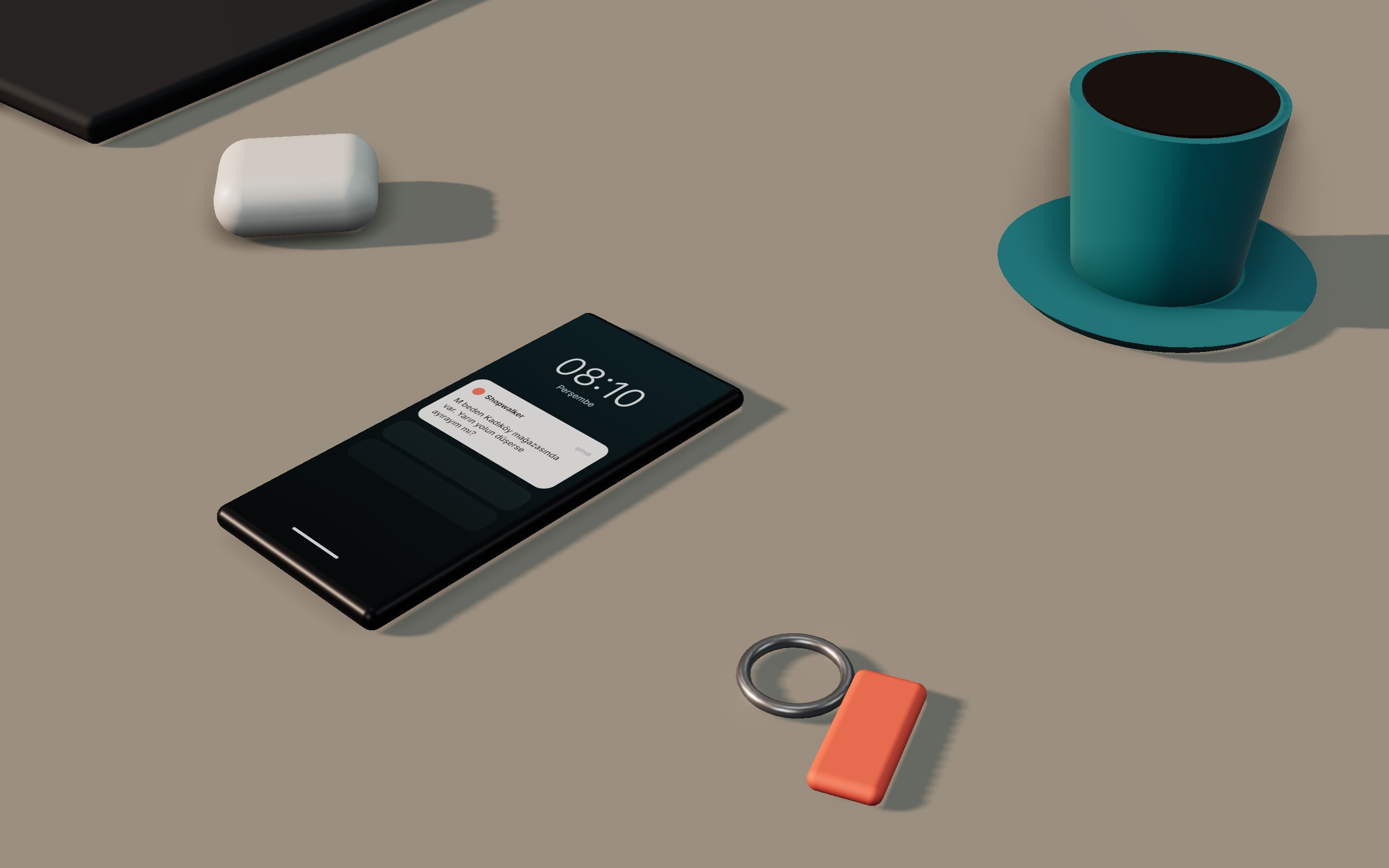
An example: on Tuesday evening Sam lands on a coat’s page on the website; the assistant answers Sam’s questions from the page and opens the size guide, and Sam adds the product to the basket and leaves. The goal is for the same conversation to pick up where it left off on Thursday in the mobile app, and on Friday on smart glasses, in the shop and at the kiosk.
Website
Mobile app
Smart glasses
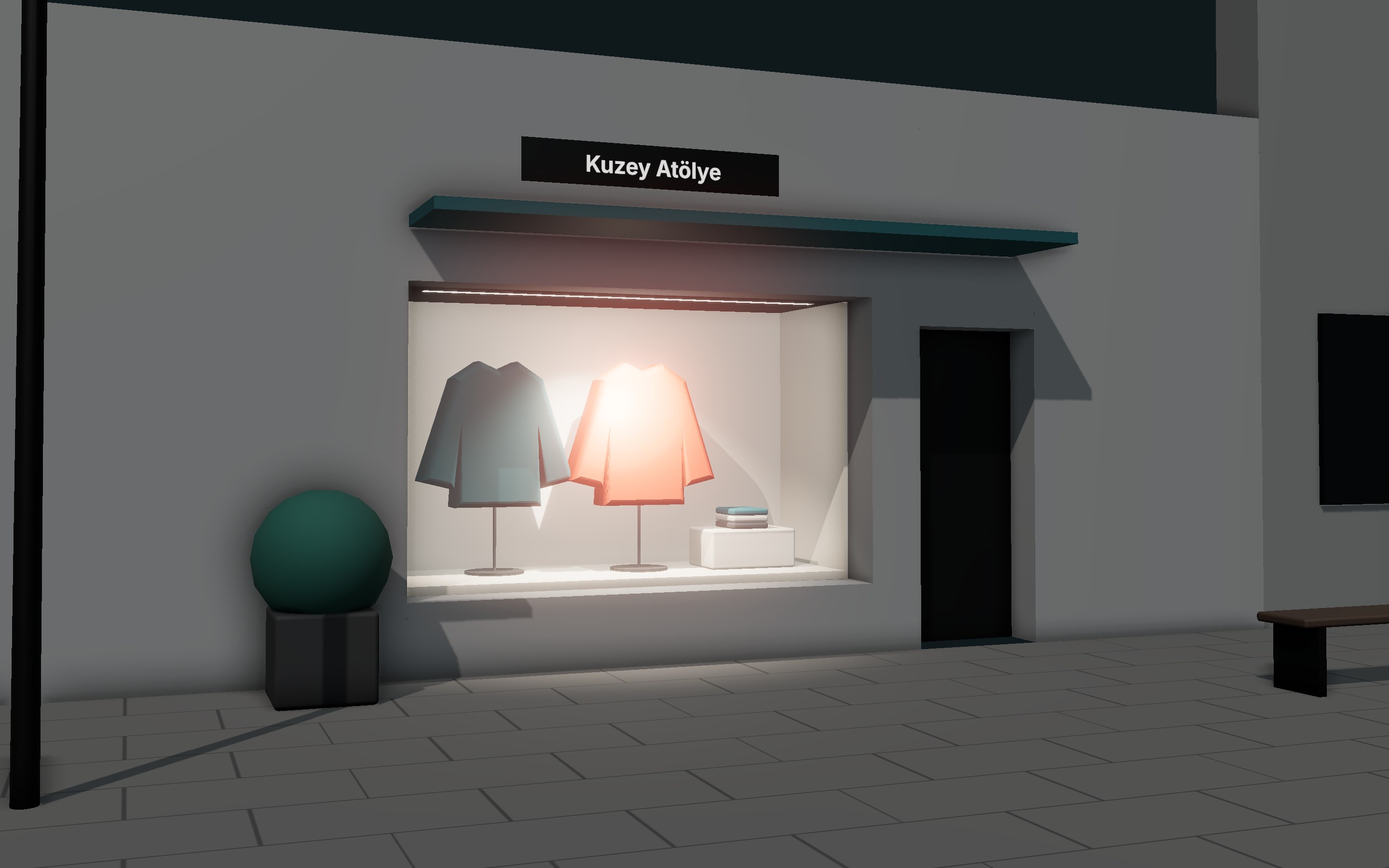
Physical shop
Kiosk
Sam is a fictional character. Every step beyond the website is a goal.
For your shop.
Sam is your customer. The adviser works in your shop.
Shopwalker is a sales adviser built for online retailers. It is installed on your shop from the outside; it talks to your customer on your pages, with your product information.
Your shop takes centre stage:
The interface your customer sees carries no product name. The assistant works under the name you give it; give it none and it stays nameless.
Commerce stays on your platform:
The basket changes in the customer’s browser through your platform’s own endpoints. Payment and orders stay on the platform.
Answers rest on your product information:
The assistant makes sense of your page and your products and gives its answer with the source. It says what it cannot do; it does not make things up.
The surfaces of Shopwalker: the website today; as goals, the mobile app, the kiosk, the physical shop, smart glasses, AR and VR.
The assistant.
What your customer meets: an orb, a dock, a frame.
The assistant is drawn from the same three parts on every surface. The orb shows its state, the dock writes the answer, the frame marks what it is pointing at on the page. On every surface the customer can see they are talking to an AI.
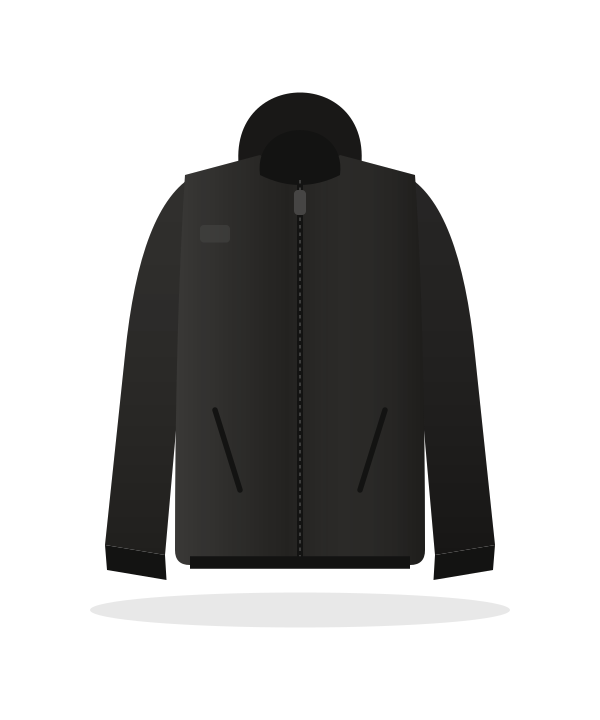
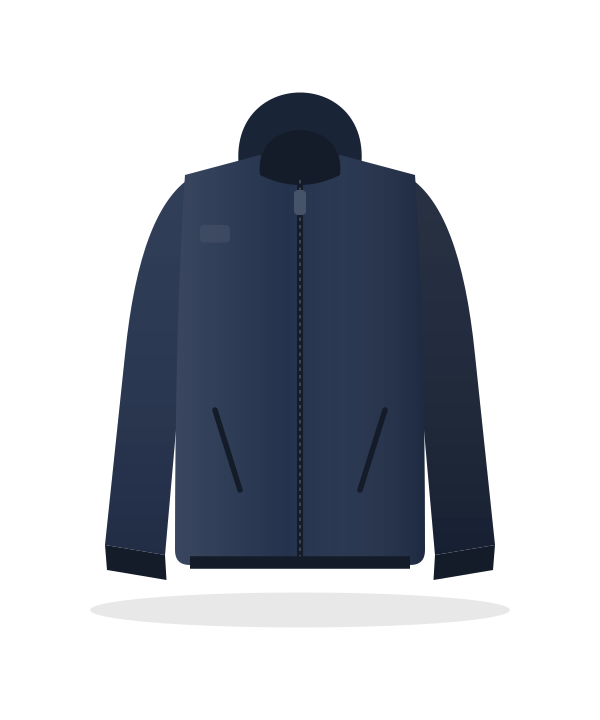
Example scenario. The product and details come from our demo shop, North Atelier.
Principles.
Five rules that do not change, whatever the surface.
Adding a new device does not mean building a new assistant. The same adviser will move to every surface with the same rules.
One session, many surfaces:
The assistant belongs to the customer, not to the device. The surface changes; the conversation is not cut off.
Accessibility first:
Voice, text, captions and, as a goal, haptic feedback are equals. No information depends on a single sense.
It drives, but hands back control:
The assistant navigates and fills in; the moment the customer touches, it stops. Money and consent always rest with a person.
Memory belongs to the customer:
Personal data is not carried by default. Everything remembered can be seen, edited and deleted.
Every action is explained:
Everything it does has a sentence. A refused action is said out loud too.
Interaction.
By hand, by gaze, by place: the input changes, the assistant does not.
Today the assistant drives the site by voice and by text. Tomorrow the same assistant will be driven by camera, projection, AR and VR too. Every new interaction sits on the same three layers: adding a new sensor means adding only a driver to the first layer.
Input.
How does the customer say it?
Working today: Voice, Text, Touch. As goals: Hand gesture, Gaze, Proximity.
Core.
What does Shopwalker understand, and what does it do?
Understands intent; our own decision engine, written in Rust.
Matches it to the shop’s products and pages.
Memory and consent stay with the customer; identity is not carried.
Output.
Where does the answer appear?
Working today: Screen, Voice. As goals: Large screen, Projection, AR and VR, Earphones and watch.
Casting:
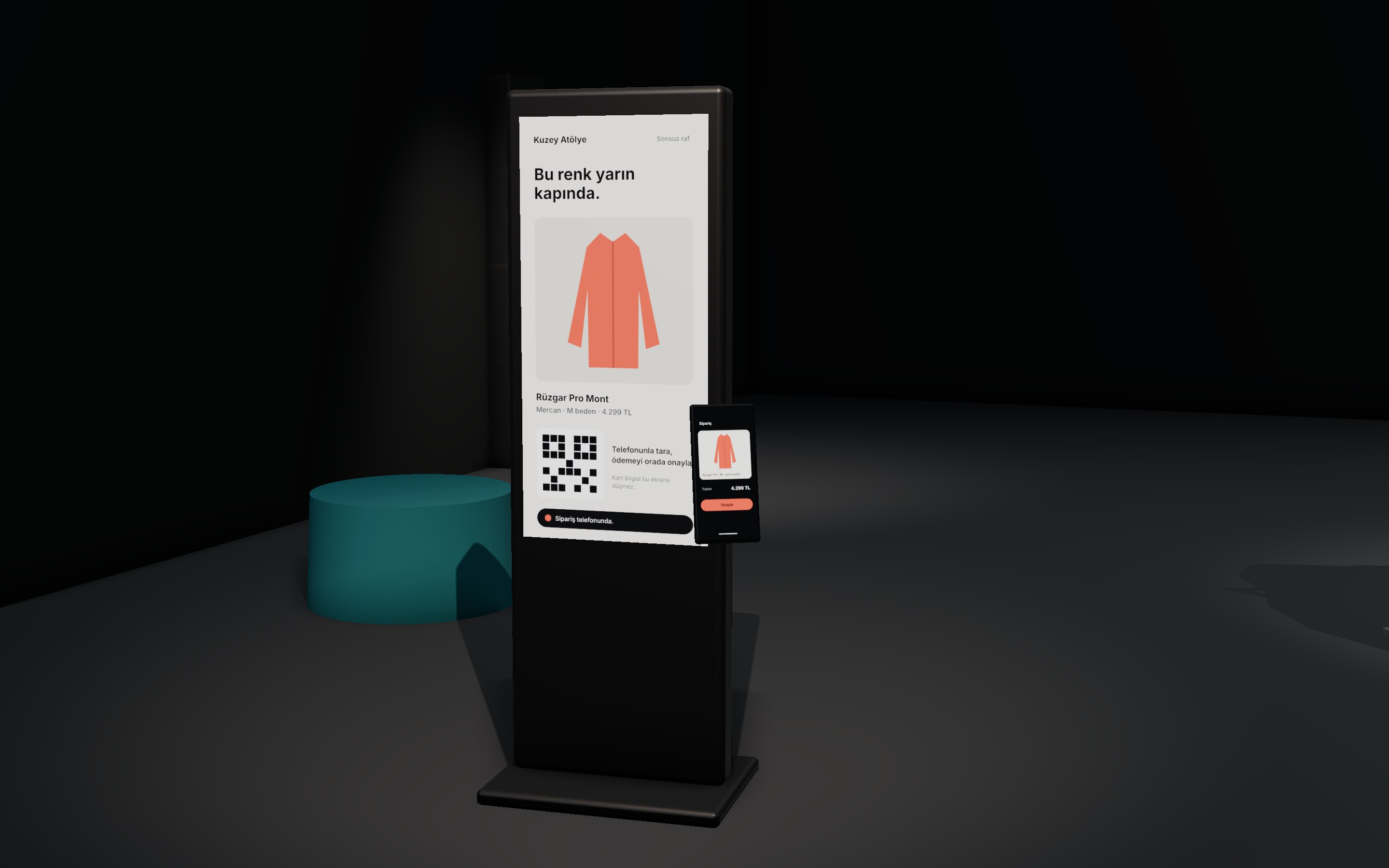
The session will move to a large screen by QR code or proximity; the phone will be the remote and the approval device. The product will be on the large screen, the payment on the phone.
Projection:
Size and colour options will be drawn in light above the shelf; on the table, an outfit will be projected beside the product.
AR and VR:
In AR the product will be in the room at true size; in VR the shop will be at home. The assistant will not take human form; it will walk beside you as an orb.
Physical shop.
The conversation that starts on the web will carry on inside the shop.
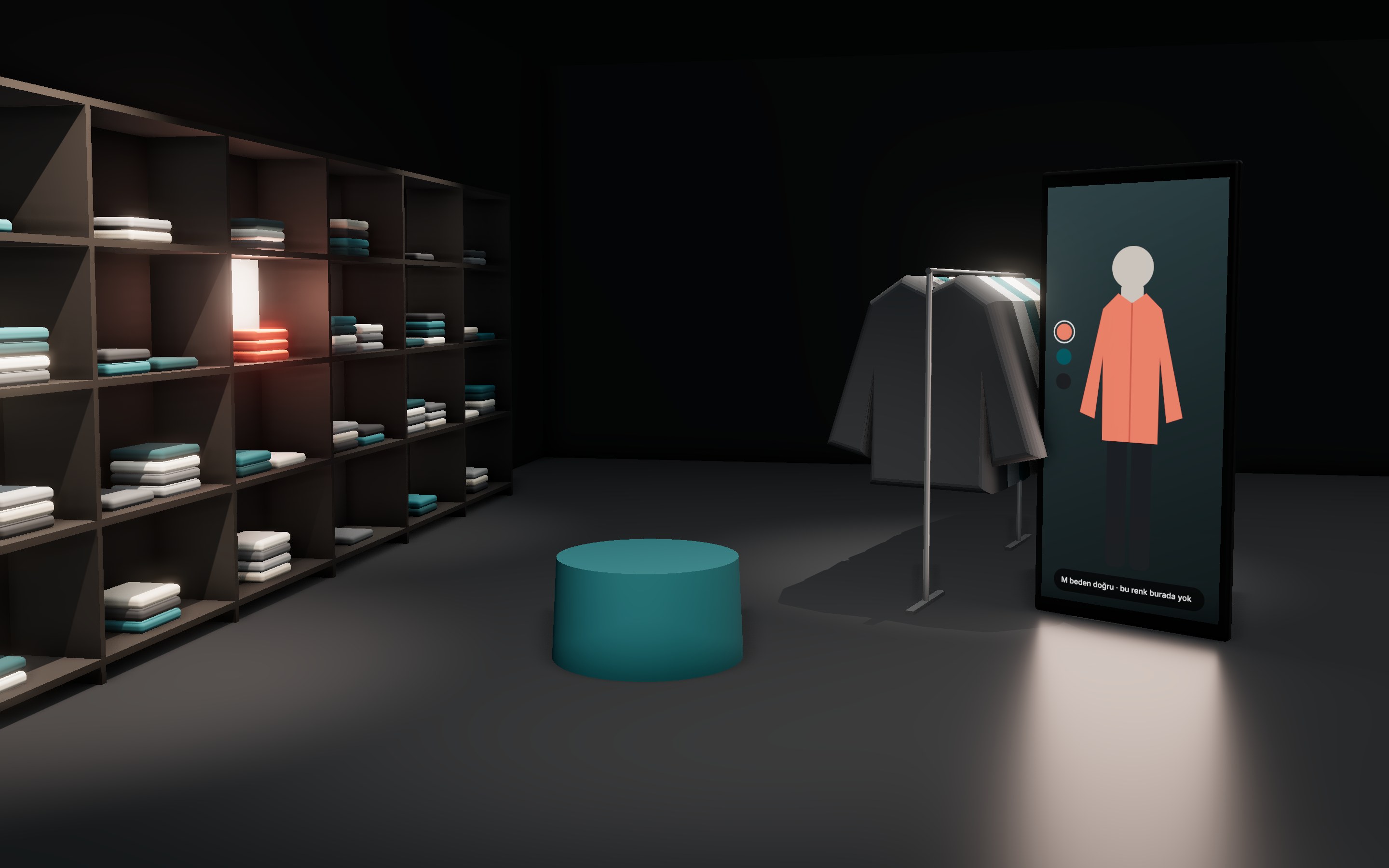
With the kiosk, shelf lighting and the smart mirror, Shopwalker will step inside the shop. The customer will find the product they reserved online on the shelf, try it on at the mirror and order the colour the shop does not have at the kiosk. Payment and personal data never land on a shared screen.
First horizon, a goal for the first twelve months.
Wake on approach:
While the kiosk is idle only the orb will breathe. When someone approaches it will say you can talk without touching; when they move away the session will close and the screen will be cleared.
First horizon, a goal for the first twelve months.
Endless aisle:
A size or colour the shop does not have will be found at the kiosk; it will be ordered for delivery to home or to the shop, and the basket will appear on the phone too.
Second horizon, a goal for twelve to eighteen months.
Guiding to the shelf:
Finding the product in the shop: the shelf light will come on, a direction arrow will appear on the glasses, the watch will vibrate.
Second horizon, a goal for twelve to eighteen months.
A shelf event lands in the basket:
The shelf of the reserved product will light up; the options will be projected above the shelf. Taking the product off the shelf will mean adding it to the basket.
Second horizon, a goal for twelve to eighteen months.
Smart mirror:
During a fitting, saying another colour will change the colour in the mirror, and an outfit will be projected beside it. The image will not be recorded.
Third horizon, a goal for twenty-four to thirty-six months and beyond.
Checkout-free exit:
Shelf and basket sensing will recognise the products; on the way out the customer will approve with a single tap on their phone or their glasses.
In the first twelve months our goal is the web, the app and the kiosk.
Between twelve and eighteen months our goal is to step inside the shop: guiding to the shelf, the smart mirror, from a shelf event to the basket.
Between twenty-four and thirty-six months the goal is to remove the screen altogether: awareness of surroundings and negotiating with the customer’s own AI.
Three horizons.
Fifty-one features, across three time frames.
We have laid out the roadmap by the surface the customer is on and by time. The first horizon takes today’s product from the web to the app and the kiosk; the second steps inside the shop; the third removes the screen altogether.
In the first twelve months the goals are: Greeting by context, Built-in chat mode, Guided tour, Variant selection that explains a refusal, Hand tracking by camera, Reminders with consent, Scan with the camera. Also One tap with the wallet, Show the camera, Haptic language, On approaching the shop, A session on a shared device, Endless aisle, Accessible layout at the kiosk. Also Queue-free payment at the kiosk, Wake on approach, Carry on to the phone, Accessibility profile, Explainable recommendation, Order companion and handover to a person. Also Inline consent, Switching language mid-conversation, Casting: from phone to large screen, Conversation analytics.
Between twelve and eighteen months the goals are: Comparison table, Pay by talking, approve by hand, Navigating by gaze, Sizing by camera, Driving by hand and several people at the kiosk, Guiding to the shelf. Also Projection mode, A shelf event lands in the basket, Smart mirror, Find what you see, AR and VR surfaces, A greeting from where you left off, Try: three D, AR, smart mirror. Also Start on one surface, finish on another, Portable session, The customer’s memory, Control by single switch and gaze, Brand voice and rules.
Between twenty-four and thirty-six months and beyond the goals are: Accompaniment with screen sharing, A silent greeting at the shop entrance, Checkout-free exit, User guide. Also Haptic counterparts of the states, Silent interface: earphones and watch, Negotiating with a representative agent, Awareness of surroundings. Also A view of the journey across surfaces.
Website.
In the first twelve months: Greeting by context, Built-in chat mode, Guided tour, Variant selection that explains a refusal, Hand tracking by camera.
Between twelve and eighteen months: Comparison table, Pay by talking, approve by hand, Navigating by gaze, Sizing by camera.
Between twenty-four and thirty-six months and beyond: Accompaniment with screen sharing.
Mobile app.
In the first twelve months: Reminders with consent, Scan with the camera, One tap with the wallet, Show the camera, Haptic language, On approaching the shop.
Kiosk.
In the first twelve months: A session on a shared device, Endless aisle, Accessible layout at the kiosk, Queue-free payment at the kiosk, Wake on approach, Carry on to the phone.
Between twelve and eighteen months: Driving by hand and several people at the kiosk.
Physical shop.
Between twelve and eighteen months: Guiding to the shelf, Projection mode, A shelf event lands in the basket, Smart mirror.
Between twenty-four and thirty-six months and beyond: A silent greeting at the shop entrance, Checkout-free exit.
Wearables.
Between twelve and eighteen months: Find what you see, AR and VR surfaces.
Between twenty-four and thirty-six months and beyond: User guide, Haptic counterparts of the states, Silent interface: earphones and watch.
On every surface.
In the first twelve months: Accessibility profile, Explainable recommendation, Order companion and handover to a person, Inline consent, Switching language mid-conversation, Casting: from phone to large screen.
Between twelve and eighteen months: A greeting from where you left off, Try: three D, AR, smart mirror, Start on one surface, finish on another, Portable session, The customer’s memory, Control by single switch and gaze.
Between twenty-four and thirty-six months and beyond: Negotiating with a representative agent, Awareness of surroundings.
Merchant dashboard.
In the first twelve months: Conversation analytics.
Between twelve and eighteen months: Brand voice and rules.
Between twenty-four and thirty-six months and beyond: A view of the journey across surfaces.
Awareness of surroundings:
With permission, the assistant will know the weather, the location and the calendar: Context, not a sales pitch.
Negotiating with a representative agent:
The customer’s personal AI will talk to Shopwalker: budget, size, delivery date. Shopwalker will make an offer within the shop’s rules; the last word rests with a person.
Silent interface:
With no screen at all: earphones and a watch. The assistant will speak, the watch will vibrate, approval will be given at the wrist.
Stages.
Four stages. Each one opens on the success of the one before.
No step of the vision is tied to a calendar; each is tied to a measurement. Until a stage’s gate criterion is met, the next does not begin.
Proof:
Pilot shops, modules built into the shop theme, the merchant dashboard.
Gate criterion:The conversion of advised sessions into sales must have been measured.
Scale:
Roll-out to all of a platform’s shops, the mobile app, the shop’s door for buyer agents.
Gate criterion:Shop owners must be using the dashboard every week.
The shop:
Kiosk, shelf lighting, smart mirror and a shop staff mode; one session between the web and the shop.
Gate criterion:The journey from web to shop and back to web must be measurable end to end.
Horizon:
Smart glasses, the AR and VR shop, awareness of surroundings, the screenless and silent interface.
Gate criterion:The same motion language and the same approval rules must hold on every surface.
As we reach new surfaces the rules tighten. Camera and location are turned on only with permission, the image does not leave the device, and payment and consent always rest with a person.
Trust.
As the assistant reaches new surfaces, the rules tighten; they do not loosen.
New inputs such as camera, gaze and proximity are powerful; that is why each is designed with limits from the start.
Camera, gaze and proximity sensing are turned on only when the customer gives permission; permission is not requested on a first visit.
The image does not leave the device; there is no face recognition and no person recognition.
Personal data does not land on shared surfaces such as a kiosk or a shop screen; payment is always on a personal device.
No sensor can give approval on its own. Money and consent always rest with a person.
What travels between surfaces is a summary of the conversation, not an identity.